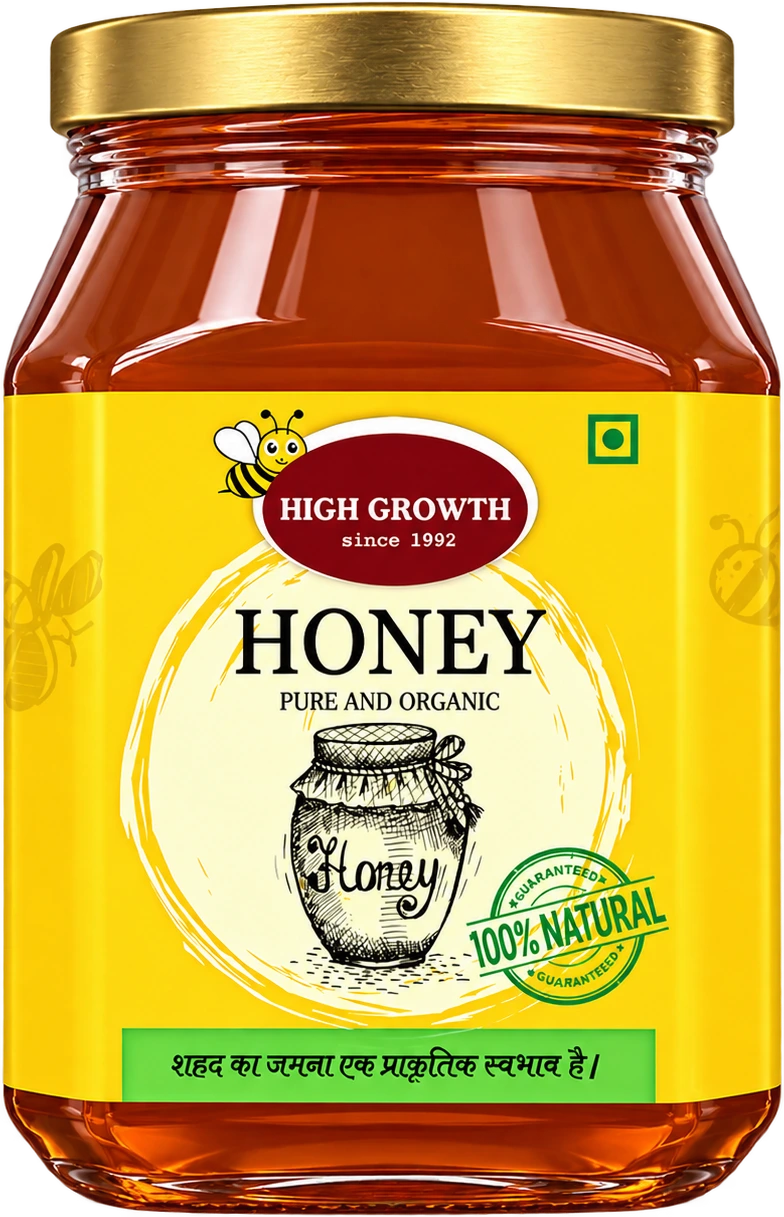
Drag to turn the jar
The honeys / Mustard
Mustard
Bharatpur mustard blossom honey
The honey the company started with in 1992. Sets fast, spreads like butter, tastes of the field it came from.
Choose a jar size
In stock at the marketplaces.
We do not take orders here. Both links open the marketplace listing in a new tab.
About this honey
Mustard is a glucose-heavy honey, so it crystallises within weeks of leaving the tank. Supermarkets hate that and heat it to stop it. We let it set, because heating is exactly what strips the enzymes people buy raw honey for.
The flow runs across the Bharatpur mustard belt through January and February. These are the same fields the business started beside in 1992 and the same three families we bought from then.
Use it on toast rather than in tea. It is at its best spread thick and cold.
The particulars
- Honey type
- Mustard
- Floral source
- Brassica juncea, Indian mustard
- Harvest season
- January to February
- Tasting notes
- Butter, hay, a peppery lift at the back
- Texture over time
- Sets within three to six weeks. It is meant to. Spread it, do not fight it.
- Storage
- Room temperature. Warming it repeatedly will coarsen the grain.
Nutrition, per 100 g
| Energy | 304 kcal |
| Carbohydrate | 82.4 g |
| of which sugars | 82.1 g |
| Protein | 0.3 g |
| Fat | 0 g |
| Moisture | 17.1 g |
Questions
Mine went solid in a month. Is that a fault?
No, that is mustard honey behaving correctly. Honey that stays liquid through a north Indian winter has usually been heated.
Why does raw honey crystallise?
Crystallisation is a natural property of raw, unheated honey. Glucose separates from water and forms fine crystals. Place the jar in warm water (under 40°C) to reliquefy.
How do I order High Growth Honey?
We sell our retail jars exclusively through Amazon India and Flipkart. Use the marketplace links on any product page.
Is this honey tested for sugar syrup adulteration?
Yes, every batch undergoes C4/C3 carbon isotope testing at NABL-accredited laboratories to verify 100% pure bee origin.