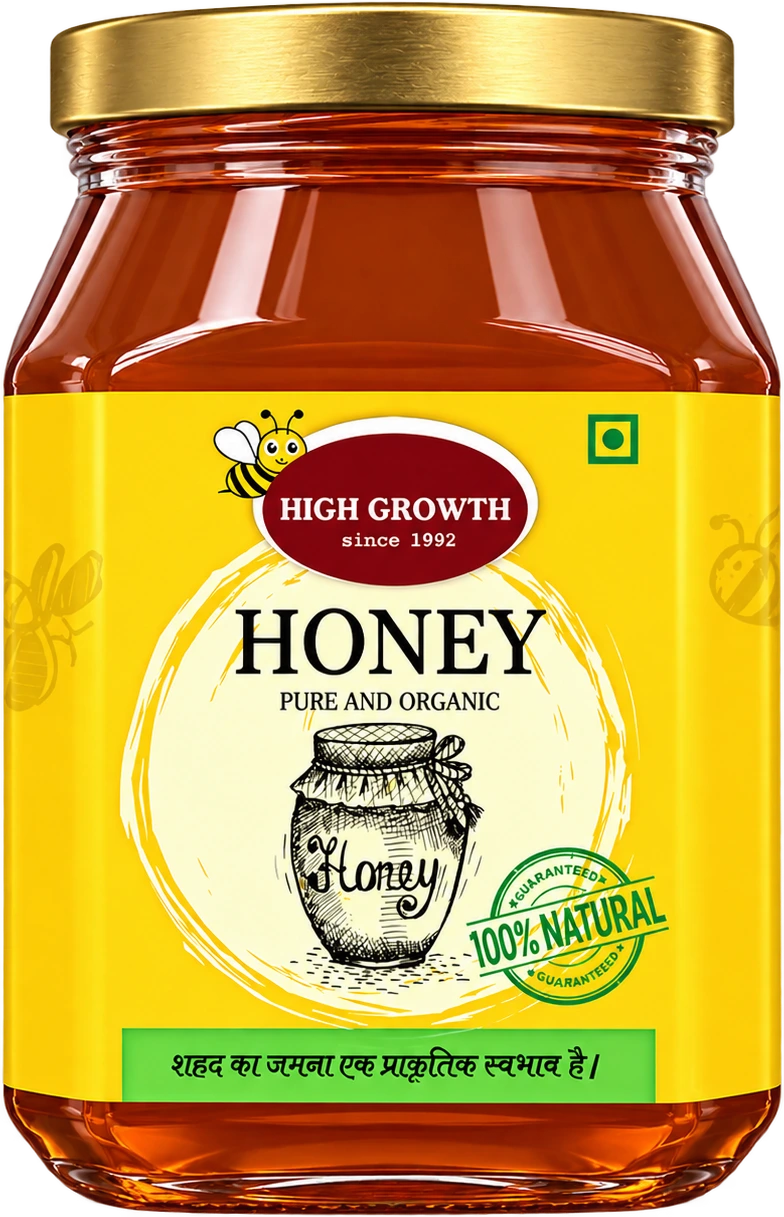
Drag to turn the jar
The honeys / Wild Forest
Wild Forest
Sundarbans wild forest honey
Squeezed from wild combs cut in the mangroves by licensed honey collectors, once a year, in April.
Choose a jar size
In stock at the marketplaces.
We do not take orders here. Both links open the marketplace listing in a new tab.
About this honey
This is not hive honey. It comes from wild Apis dorsata combs hanging in the mangrove canopy, cut by mowalis who hold forest department permits and go in for six weeks each spring.
The flow is mostly khalisha and goran blossom, both salt-tolerant mangrove species that grow nowhere else in India. That is what gives the honey its faint saline edge, which people either love immediately or take a jar to get used to.
- Wild harvested, not from managed hives
- Strained cold through a 400 micron mesh, nothing else
- Moisture runs higher than hive honey, so keep the lid closed
The particulars
- Honey type
- Wild Forest
- Floral source
- Khalisha and goran mangrove blossom
- Harvest season
- April to May
- Tasting notes
- Saline finish, smoke, dried dates, a long bitter edge
- Texture over time
- Stays runny for eight to ten months, then sets into a coarse grain.
- Storage
- Room temperature, lid closed, away from sun. Do not refrigerate.
Nutrition, per 100 g
| Energy | 304 kcal |
| Carbohydrate | 82.4 g |
| of which sugars | 82.1 g |
| Protein | 0.3 g |
| Fat | 0 g |
| Moisture | 17.1 g |
Questions
Why is this the most expensive honey you sell?
The collectors go into a tiger reserve for it, the window is six weeks long, and the total legal harvest across the whole Sundarbans is small. Price follows from that.
Why does raw honey crystallise?
Crystallisation is a natural property of raw, unheated honey. Glucose separates from water and forms fine crystals. Place the jar in warm water (under 40°C) to reliquefy.
How do I order High Growth Honey?
We sell our retail jars exclusively through Amazon India and Flipkart. Use the marketplace links on any product page.
Is this honey tested for sugar syrup adulteration?
Yes, every batch undergoes C4/C3 carbon isotope testing at NABL-accredited laboratories to verify 100% pure bee origin.