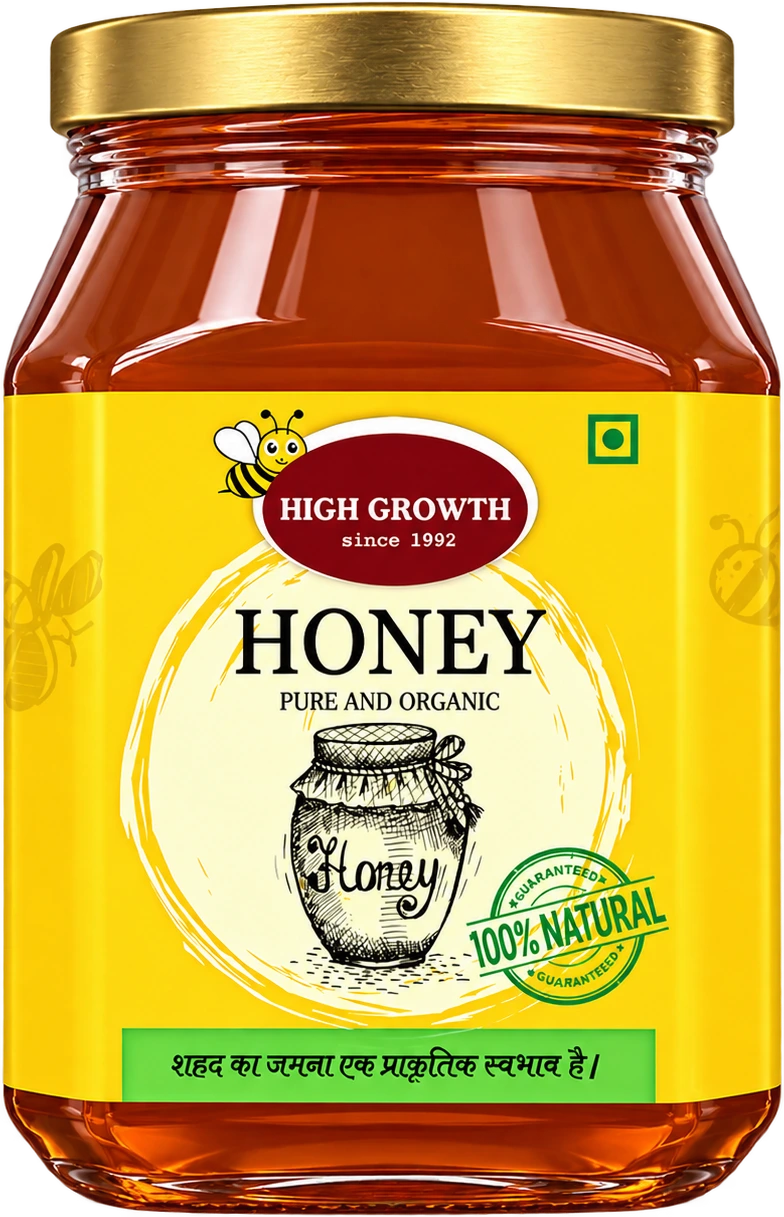
Drag to turn the jar
The honeys / Multiflora
Multiflora
Nilgiri multiflora honey
One apiary above Kotagiri, one flow, many blooms. Shola forest edge, eucalyptus windbreak, tea in between.
Choose a jar size
In stock at the marketplaces.
We do not take orders here. Both links open the marketplace listing in a new tab.
About this honey
Multiflora is often a euphemism for blended. It is not here. This is a single apiary in the Nilgiris across a single autumn flow, and what the bees found in range is what is in the jar.
At 1,900 metres that range covers shola forest edge, a eucalyptus windbreak and several hundred hectares of tea that flowers between plucking rounds. The result changes slightly year to year, which is the point of buying it.
Batch codes on the lid carry the apiary and the harvest week.
The particulars
- Honey type
- Multiflora
- Floral source
- Shola forest edge, eucalyptus, tea blossom
- Harvest season
- September to October
- Tasting notes
- Malt, cooked plum, a resinous finish from the eucalyptus
- Texture over time
- Sets softly at around four months into a spreadable cream.
- Storage
- Room temperature. Warm the jar in water under 40°C to loosen it.
Nutrition, per 100 g
| Energy | 304 kcal |
| Carbohydrate | 82.4 g |
| of which sugars | 82.1 g |
| Protein | 0.3 g |
| Fat | 0 g |
| Moisture | 17.1 g |
Questions
Why does raw honey crystallise?
Crystallisation is a natural property of raw, unheated honey. Glucose separates from water and forms fine crystals. Place the jar in warm water (under 40°C) to reliquefy.
How do I order High Growth Honey?
We sell our retail jars exclusively through Amazon India and Flipkart. Use the marketplace links on any product page.
Is this honey tested for sugar syrup adulteration?
Yes, every batch undergoes C4/C3 carbon isotope testing at NABL-accredited laboratories to verify 100% pure bee origin.